Let Them East Cake 2.0

Society thrives on hot takes and shooting from the hip, a reflexive urge to dive headfirst into the noise every time a headline demands attention. The dopamine hit of having an opinion—any opinion—is irresistible in today's world. But something about the churn of it all, the endless, performative immediacy, feels profoundly hollow. I've avoided that trap in my writing for a while, or at least tried to. Meditate, think a bit, let more info surface, and see what the collective says. The idea of cranking out a post just to toss it into the chaos, where half of it expires within hours, bugs me to no end. Worse, it feeds the metastasizing cancer of misinformation, a problem we're already drowning in.
Of course, this isn't to say that staying informed or speculating about breaking news is inherently bad. It's human nature. But there are platforms far better suited for it. Take Bluesky, for example. It's a proper space where breaking news finds its footing, where the hive mind processes and evolves in real-time. The microblog format works perfectly for this kind of discourse—quick, adaptive, and communal in a way a traditional blog post never could be. Sure, it's not perfect. The same issues with misinformation and lazy sourcing are already creeping in. But it's better equipped for the speed and chaos of modern news than a long-form article that ages out before it's even digested.
So now, onto the hottest of hot news: the assassination of UnitedHealthcare CEO Brian Thompson. For those who don't follow healthcare closely, UnitedHealthcare is one of the largest insurance providers in the nation. This institution shapes the daily realities of millions of Americans. Thompson was widely regarded as a central figure in pretending to be god, a man at the helm of a corporate behemoth whose policies impacted who got care and who went without. The news is days old now, and we still don't know who the killer is. Is this some hyper-competent professional assassin, a ghost in the machine? Or is it just an amateur with dumb luck and a grudge? He's either a hero or a villain, depending on which 'choose your own adventure' source you pick.
Opinion: This one trick CEOs don't want you to know about.
The media and public figures mourn him as a brilliant strategist navigating a flawed system with skill and ambition. But for many Americans, the reaction is starkly different: grim satisfaction. To them, Thompson was an emissary of a plutocratic elite, a human embodiment of the power structures that reduce essential services to stock gains. Privatized healthcare policies, AI-driven denial letters, and the ever-widening gaps in coverage all flowed from a machine fueled by wealth and insulated by an oligarchy of corporate interests. The scrawled messages left at the scene suggest this wasn't random but a brutal punctuation mark in a long, festering sentence about wealth inequality, class oppression, and the relentless grind of a system designed to concentrate power at the top.
Here, we have a premeditated, stone-cold, calculated attack and a national conversation that feels disconcertingly cohesive—cutting across entrenched polarized divides. It's as though wealth inequality has finally conjured its own Archduke Franz Ferdinand moment—an incendiary act poised to shatter the facade of stability that oligarchs have long maintained. Instead of the usual polarized chaos, there's a hesitant agreement in the air: a recognition that a system propped up by corporate titans, private equity moguls, and political enablers has been laid bare. Critics of unchecked corporate power, disillusioned centrists, and even segments of the political fringes find themselves momentarily aligned in seeing something rotten at the core of a social order that rewards a privileged few at the expense of the many.
What stands out isn't just the allegory of the act but the unusual overlap in how it's being processed. There's a condemnation of the violence, of course. Still, it's accompanied by an uneasy acknowledgment that the ground beneath us is shifting. The slow-burning rebellion against systemic inequities and a wronged working class have come together, not canceling each other out but highlighting the same problem.

The weight of Thompson's death lies in what he represented: a system built to profit from depriving humans of healthcare. UnitedHealthcare is a grotesque machine of capitalism and privatization. Built to charge people for a healthcare service they would then refuse to follow through on. Imagine this scenario, like really picture it: hundreds of thousands of people are paying into a policy, yet one-third of their needs are barred from ever benefiting from it.
Breaking News: WTF
Thompson's assassination was more than just an attack on the CEO, and now we ask: what kind of response does this act demand? And perhaps more hauntingly: what kind of response will it get?
There are three most likely scenarios that come to mind. The first path is the easiest and most likely: forgetting. It's what we do best in the age of endless doomscrolling. The shock of the event fades as newer, shinier headlines flood in, and we opt for the path of least resistance, partial reforms, and muddled compromises. Forgetting doesn't require confrontation or change; it just lets the status quo reassert itself, ensuring that nothing meaningful happens. The algorithms, media, and agendas, ever hungry, bury the story in the avalanche of content, and we return to our regularly scheduled smoke screens and moot outrage.
Then there's the second path: authoritarianism. Trump leans into this and 'law and orders' his way into a dictatorship. It's the path that thrives on fear, feeding on the sense that everything is spiraling out of control. Crackdowns, increased surveillance, and the militarization of 'security' are all waiting in the wings, sold to us as necessary evils. It's seductive because it feels like action—like control. But a false sense of stability tightens the noose on dissent and consolidates power where it's already entrenched. History has played this song on repeat, and the chorus always sounds the same: the cost of safety is freedom, and we pay it willingly every time fear outweighs hope.
The third path: reckoning. This path is chaotic and uncertain, reminiscent of late-18th-century France. An aristocratic indifference and crushing inequity sparked a violent upheaval that promised liberation from entrenched elites but risked something worse. It's the primordial ooze where movements are born, where questions about power, equity, and justice demand hard answers. Yet without vision and clarity, this reckoning can devolve into chaos—into more violence, into the very thing it seeks to dismantle. It asks us not only to see the cracks in the system but also to imagine what a rebuilt foundation might look like—one that breaks the grip of plutocrats and ensures that Elon never Tweets, 'let them eat cake.'
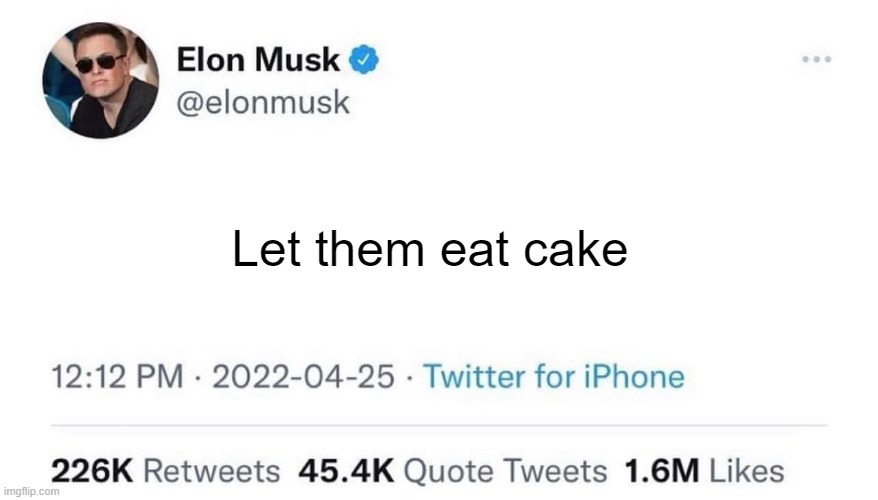
Hot take: We rarely recognize our chosen path in the moment. Forgetting shows itself quickly—just a slow fade into old routines. Authoritarianism and reckoning are subtler, evolving, and emerging movements that take years to reveal their true nature. This is speculation, and by the time we see it clearly, we’ll already be on our way.
What makes this moment particularly fraught is the moral paradox at its core. On the one hand, violence is a tragedy, a cost we should never normalize. On the other hand, history teaches us that desperation breeds it. When systems are unyielding, when people are unheard, violence becomes a language—a brutal, untranslatable dialect of rage and despair. This act, as horrific as it is, forces us to confront the conditions that made it possible. Do we dismiss it as the work of a lone extremist, or dare we ask what it reveals about the state of our societal spirit?
And what about empathy? Healthcare, at its core, should be about compassion, but in the hands of corporations, it's become transactional. The pain of those denied care is abstracted into dollar signs, their suffering invisible behind spreadsheets and profit margins. The assassination forces us to grapple with our own capacity for empathy: does it expand in the face of tragedy or shrink, worn thin by the weight of systemic injustice?
As we stand on this precipice, the paths before us: forgetting, authoritarianism, reckoning. These paths aren't just theoretical; they're deeply human choices that have been made before with very real consequences. None of these options are easy, well forgetting is fairly easy, at least in the short term, although none come without cost.

Just In: Why are people Google searching for the Blue Cross CEO?
Thompson's assassination is not a clean metaphor or a rallying cry. It's a gray mess of a tragedy. But like all tragedies, it's also a mirror. It reflects the fractures in our systems, the moral ambiguities we've grown too comfortable with, and the uneasy balance between power and desperation. Will we shatter this reflection, bury it under the next rush of headlines, or confront it head-on? If nothing else, let this serve as a reminder: the moral coherence we crave is fragile, and every choice we make—especially the choice to do nothing—carries weight. Forgetting is easy, especially when buried by Unpopular Opinion, IMO, BASED, Snap Judgment, but the cost of that quick way out is steep. So what kind of world do we want to build, and are we willing to pay the price to build it?
Thanks for reading. Stay Human.

Sources:
- UnitedHealthcare Claim Denial Rates
- UnitedHealthcare CEO Manhattan Shooting Death
- ‘Rule of the lawless’: what does the authoritarian playbook look like?
- The People Cheering the UnitedHealthcare CEO Shooting
- The Shooting That Was Inevitable

